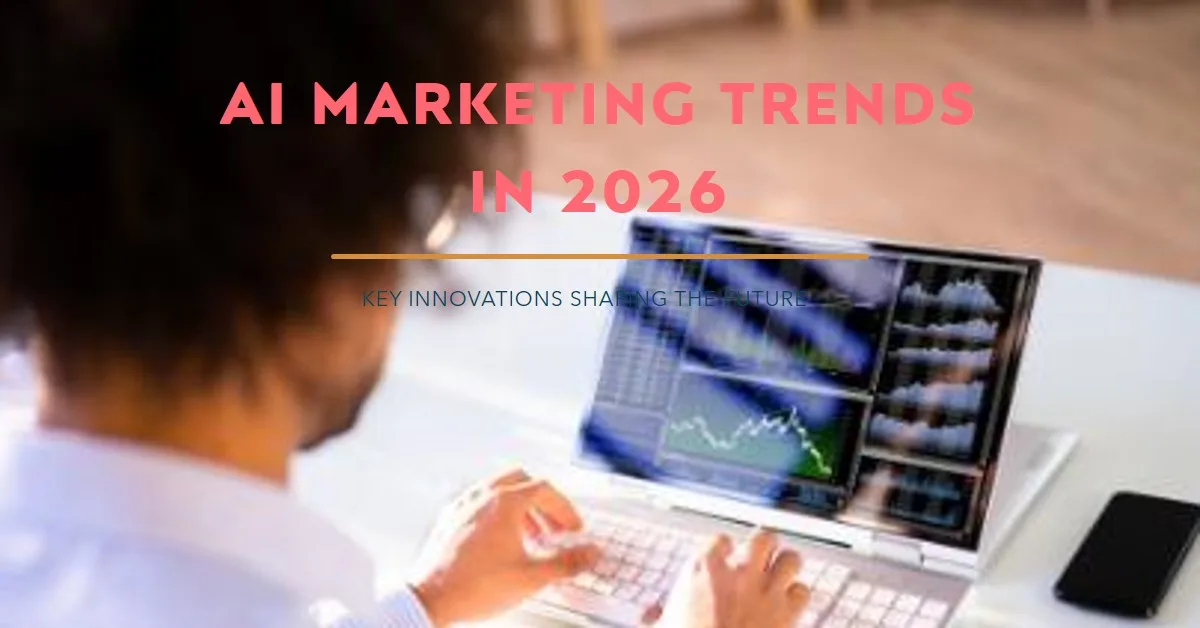
The world of marketing is changing faster than ever before, and artificial intelligence is leading the charge. As we look toward 2026, businesses and marketers need to proactively prepare for a landscape where AI marketing trends will completely reshape how companies connect with their customers. To stay ahead, consider investing in AI tools, training your team on emerging technologies, and integrating AI-driven data analysis into your strategy. Understanding these AI marketing trends to watch in 2026 isn’t just helpful—it’s essential for anyone who wants to stay competitive in the digital marketplace. From personalised customer experiences to automated content creation, artificial intelligence is set to revolutionise every aspect of how brands communicate with their audiences.
The Rise of Hyper-Personalisation Through AI
Gone are the days when sending an email with someone’s first name counted as personalisation. In 2026, AI marketing will take personalisation to levels that make customers feel truly understood and valued. Imagine visiting a website that instantly adapts its layout, product recommendations, and messaging to you based on your browsing history, purchase patterns, and even your current mood, detected through behavioural signals.
Advanced AI algorithms will analyse thousands of data points in milliseconds to create truly unique experiences for each customer. Two people visiting the same online store might see completely different homepages, product selections, and promotional offers. The AI will consider factors like past purchases, time of day, device being used, location, weather in their area, and even current trending topics that might interest them.
This level of hyper-personalisation will extend beyond websites. Email marketing campaigns will become incredibly sophisticated, with AI determining not just what content to send, but also the perfect time to send it, the ideal subject line for each individual, and even the optimal email length based on each person’s reading habits. Social media ads will become so precisely targeted that they’ll feel less like advertisements and more like helpful suggestions from a friend who knows you well.
Conversational AI and Advanced Chatbots
The chatbots of 2026 will be nothing like the frustrating automated systems we sometimes deal with today. Thanks to massive improvements in natural language processing and machine learning, conversational AI will become nearly indistinguishable from talking to a real person. These AI-powered assistants will understand context, emotion, sarcasm, and even cultural nuances in ways that seem almost human, making interactions more comforting and trustworthy.
Businesses will deploy these advanced chatbots across every customer touchpoint. Whether someone is shopping on a website, messaging on social media, or even making a phone call, they’ll encounter AI assistants that can handle complex questions, solve problems creatively, and provide genuinely helpful support. These systems won’t just answer pre-programmed questions—they’ll engage in meaningful conversations, remember past interactions, and build relationships with customers over time.
Voice-activated AI marketing will also see explosive growth. As smart speakers and voice assistants become even more integrated into our daily lives, brands will optimise their marketing strategies for voice search and voice shopping. People will tell their AI assistant what they need, and the AI will recommend products, compare options, and complete purchases—all through natural conversation. This shift means marketers will need to think beyond keywords and focus on how people actually talk and ask questions in real life.
Predictive Analytics and Customer Behaviour Forecasting
One of the most powerful AI marketing trends to watch in 2026 is the advancement of predictive analytics. AI systems will become incredibly accurate at predicting what customers will do before they even know it themselves. By analysing patterns in behaviour data, purchase history, social media activity, and countless other signals, AI will forecast future customer needs with remarkable precision, helping businesses feel proactive and attentive to their customers’ future needs.
For example, an AI system might notice that a customer’s purchasing patterns suggest they’re about to move to a new house, even before the customer starts actively searching for moving-related products. The system could then proactively recommend relevant products or services at precisely the right moment. This predictive capability will help businesses stay one step ahead, creating marketing campaigns that feel timely and relevant rather than random or intrusive.
Predictive analytics will also revolutionise inventory management and product development. AI will analyse market trends, social media conversations, and competitor activities to predict which products will become popular before demand spikes. It allows businesses to prepare their supply chains and marketing campaigns in advance, giving them a significant competitive advantage.
AI-Generated Content at Scale
Content creation is one area where AI marketing trends will have a massive impact in 2026. AI tools can generate high-quality blog posts, social media updates, product descriptions, video scripts, and even visual content such as images and videos. However, the most successful marketers won’t replace human creativity entirely—they’ll use AI to enhance and accelerate their work.
AI content generators will become sophisticated enough to match a brand’s voice and style consistently across all platforms. They’ll research topics, identify trending keywords, and create engaging content that resonates with specific target audiences. For businesses producing large volumes of content, this means they can maintain quality while dramatically increasing output.
Visual content creation through AI will also advance significantly. Tools will generate custom images, design social media graphics, create video content, and even produce personalised video messages at scale. Imagine a brand sending thousands of personalised video messages to customers, each featuring the customer’s name and tailored recommendations—all generated automatically by AI.
The key for marketers will be finding the right balance between AI efficiency and human creativity. While AI can handle repetitive content tasks and initial drafts, human marketers will focus on strategy, emotional storytelling, and adding the authentic touches that build genuine connections with audiences.
Programmatic Advertising Gets Smarter
Programmatic advertising—the automated buying and selling of ad space—will reach new heights of sophistication in 2026. AI systems will optimise ad campaigns in real-time, making thousands of micro-adjustments to targeting, bidding, creative elements, and placement to maximise return on investment.
These advanced AI systems will consider an enormous range of factors when deciding where and when to show ads. They’ll analyse user behaviour across multiple devices and platforms, understand the context in which ads appear, and even adjust messaging based on current events or trending topics. The result will be advertising that feels more relevant and less intrusive to consumers.
Dynamic creative optimisation will become standard practice. Instead of creating a few versions of an ad and testing them, AI will automatically generate thousands of variations, mixing and matching headlines, images, calls to action, and other elements. The AI will then show each person the specific combination most likely to resonate with them based on their profile and behaviour.
Emotion AI and Sentiment Analysis
Understanding how customers feel about products, brands, and marketing messages will become easier thanks to emotion AI. These systems use facial recognition, voice analysis, and text interpretation to detect and understand human emotions. In 2026, this technology will be woven throughout the marketing landscape.
Brands will use emotion AI to test marketing materials before launching campaigns. Instead of relying solely on surveys and focus groups, they’ll analyse facial expressions and emotional responses as people view ads or interact with content. It provides honest, unfiltered feedback about what truly resonates with audiences versus what falls flat.
Customer service will be transformed by emotion AI as well. Chatbots and virtual assistants will detect frustration, confusion, or satisfaction in customers’ messages and adjust their responses accordingly. If someone seems upset, the AI might adopt a more empathetic tone or escalate the issue to a human representative. This emotional intelligence will make automated customer interactions feel more human and supportive.
Social media monitoring tools will use advanced sentiment analysis to understand not just what people are saying about brands, but how they feel. It goes beyond simple positive or negative classifications to detect nuanced emotions such as excitement, disappointment, nostalgia, and anticipation. Marketers can use these insights to adjust their strategies in real-time and address concerns before they escalate.
AI-Powered Influencer Marketing
Influencer marketing will evolve dramatically in 2026 with AI assistance. Finding the right influencers for brand partnerships will become much more scientific and practical. AI tools will analyse millions of social media profiles to identify influencers whose audiences genuinely align with a brand’s target market, looking beyond simple follower counts to examine engagement quality, audience demographics, and content authenticity.
These AI systems will also predict campaign performance before brands invest. By analysing historical data from similar campaigns and influencer partnerships, AI can forecast likely reach, engagement, and conversion rates with impressive accuracy. It helps brands allocate their influencer marketing budgets more efficiently and avoid costly partnerships that won’t deliver results.
Virtual influencers—completely AI-generated personalities—will also become more prevalent. These digital characters can be perfectly on-brand, never have scheduling conflicts, and can be present in multiple places simultaneously. While they won’t replace human influencers, they’ll offer brands new creative opportunities for storytelling and audience engagement.
Privacy-First AI Marketing
As privacy regulations continue to tighten worldwide, AI marketing trends in 2026 will need to balance personalisation with privacy protection. The days of collecting and using personal data without restriction are ending, and successful marketers will embrace privacy-first approaches that still deliver excellent customer experiences.
AI will play a crucial role in this transition. Advanced systems will enable personalisation without collecting or storing sensitive personal information. Techniques like federated learning allow AI models to learn from user data without that data ever leaving the user’s device. It means customers can enjoy personalised experiences while maintaining control over their private information.
Transparency will become a competitive advantage. Brands that clearly explain how they use AI and data will build more trust with customers. AI systems will help companies automatically comply with complex privacy regulations, flagging potential issues and ensuring marketing practices meet legal requirements across different regions and jurisdictions.
The Integration of AI Across Marketing Channels
One of the most significant AI marketing trends to watch in 2026 is the seamless integration of AI across all marketing channels. Rather than using separate AI tools for email, social media, advertising, and website optimisation, brands will deploy unified AI systems that coordinate strategies across every touchpoint.
This omnichannel AI approach means that insights gained from one channel automatically inform strategies on other channels. If a customer interacts with a chatbot on a website, that conversation might influence what social media ads they see or what email campaigns they receive. The AI creates a cohesive, consistent experience regardless of where or how customers interact with a brand.
Marketing automation will become truly intelligent. Instead of following rigid, pre-programmed workflows, AI systems will make dynamic decisions about customer journeys in real-time. They’ll recognise when someone needs more information before making a purchase decision, when to offer an incentive, or when to step back and give space. This fluid, responsive approach will feel much more natural to customers than traditional marketing automation.
Preparing Your Business for AI Marketing
Understanding these AI marketing trends is one thing, but preparing your business to take advantage of them is another. The good news is that you don’t need to be a tech giant to benefit from AI in marketing. Many AI tools are becoming more accessible and user-friendly, designed for marketers without technical backgrounds.
Start by identifying which areas of your marketing could benefit most from AI assistance. You may struggle with content creation, or customer service may take up too much time. Focus on solving specific problems rather than trying to implement AI everywhere at once. Small, successful AI implementations can build momentum and demonstrate value to stakeholders.
Invest in learning and skill development. The marketers who thrive in 2026 will be those who understand both traditional marketing principles and how to work effectively with AI tools. You don’t need to become a data scientist, but developing AI literacy—understanding what AI can do, its limitations, and how to interpret its outputs—will be crucial.
Data quality matters more than ever. AI systems are only as good as the data they learn from. Focus on collecting accurate, relevant data and organising it in ways that AI tools can use effectively. Clean up existing data, establish strong data governance practices, and carefully consider what information you really need to collect.
The Human Element Remains Essential: AI Marketing Trends to Watch in 2026
Despite all these advances in AI marketing trends, the human element will remain essential in 2026. AI is a powerful tool, but it cannot replace human creativity, emotional intelligence, ethical judgment, and genuine empathy. The most successful marketing strategies will use AI to handle repetitive tasks, process vast amounts of information, and optimise technical aspects—freeing human marketers to focus on strategy, storytelling, relationship building, and creative innovation.
Customers will still crave authentic human connections with brands. While they might appreciate the convenience of AI-powered chatbots and personalised experiences, they’ll also value moments of genuine human interaction. Innovative brands will use AI to create space for more meaningful human engagement rather than trying to automate everything.
Ethical considerations will require human oversight. As AI becomes more powerful in marketing, questions about manipulation, fairness, bias, and privacy become more critical. Human marketers must establish ethical guidelines, monitor AI systems for unintended consequences, and ensure that marketing practices align with company values and societal expectations.
Conclusion: AI Marketing Trends to Watch in 2026
The AI marketing trends to watch in 2026 represent both exciting opportunities and significant challenges. From hyper-personalisation and conversational AI to predictive analytics and emotion recognition, artificial intelligence will transform how brands connect with customers. These changes will happen quickly, and businesses that adapt will gain substantial competitive advantages over those that resist.
The key to success isn’t simply adopting every new AI tool that appears. Instead, focus on understanding your customers’ needs, identifying where AI can genuinely improve their experiences, and maintaining the human elements that build lasting relationships. Use AI to enhance your marketing, not replace the creativity and empathy that make marketing truly effective.
As we move through 2025 and into 2026, stay curious, keep learning, and experiment with AI marketing tools in low-risk ways. The future of marketing is neither fully human nor fully automated—it’s a thoughtful collaboration between human creativity and artificial intelligence, each contributing what it does best. By preparing now and staying adaptable, your business can thrive in the rapidly approaching AI-powered marketing landscape.
Some links in this article may be affiliate links, meaning they could generate compensation to us without any additional cost to you should you choose to purchase a paid plan. These are products we have personally used and confidently endorse. Please note that this website does not provide financial advice or investment recommendations. You can review our affiliate disclosure in our privacy policy for more information.